Overview of Climate Change and Weather
Climate change and weather are closely related environmental issues that have an impact on people, businesses, agriculture, ecosystems, and economies worldwide. Despite their occasional interchangeability, the terms “weather” and “climate” refer to distinct concepts. Climate describes long-term patterns and trends in weather, whereas weather refers to short-term atmospheric conditions.
As communities deal with shifting temperatures, rainfall patterns, droughts, floods, heatwaves, and other environmental issues, it becomes more crucial to comprehend the connection between weather and climate change. Climate change does not imply that global warming is the cause of every single weather event. Rather, factors that affect the probability and severity of some extreme weather occurrences can change due to climate change.
》What Is Weather?
Weather describes the state of the atmosphere at a particular place and time. It can change from hour to hour or from one day to another.
》Common Elements of Weather
Weather includes several atmospheric conditions, such as:
- Temperature
- Rainfall
- Wind speed and direction
- Humidity
- Cloud cover
- Atmospheric pressure
- Storms and thunderstorms
For example, a location may experience sunshine in the morning, heavy rainfall in the afternoon, and cooler temperatures at night. These are examples of short-term weather conditions.
Weather forecasts are therefore useful for daily activities. Farmers, drivers, travelers, construction workers, businesses, and households can use forecasts to prepare for expected conditions.
》 What Is Climate Change?
Climate change refers to long-term changes in Earth’s temperatures and weather patterns. Climate naturally changes over long periods, but modern climate change is largely driven by human activities that increase greenhouse gas concentrations in the atmosphere.
》 Major Causes of Climate Change
The burning of fossil fuels is a major source of greenhouse gas emissions. Coal, oil, and natural gas are widely used for electricity generation, transportation, manufacturing, and other economic activities.
Other contributing activities include:
● Deforestation and land-use changes
● Industrial production
● Transportation
● Agriculture and livestock production
● Energy consumption
● Certain waste-management activities
Greenhouse gases trap heat in the atmosphere, contributing to long-term global warming and broader changes in the climate system.
》 How Are Weather and Climate Change Connected?
The relationship between weather and climate change can be understood by looking at short-term events within long-term trends.
Climate change does not determine exactly what the weather will be on a particular day. Instead, it can change the background conditions in which weather develops. For example, higher average temperatures can increase the likelihood of unusually hot days and heatwaves in many regions.
Similarly, changes in atmospheric moisture and other climate conditions can influence rainfall patterns and the potential for some heavy precipitation events.
Scientists study long-term observations rather than individual weather events to identify climate trends.
》 Effects of Climate Change on Weather Patterns
Climate change can influence several types of weather and environmental conditions.
》 Rising Temperatures and Heatwaves
Increasing global temperatures are associated with more frequent and intense extreme heat in many parts of the world. Heatwaves can affect human health, agriculture, water supplies, energy demand, and outdoor work.
Cities can experience additional heat because buildings, roads, and other infrastructure can absorb and retain heat. Urban planning, green spaces, shade, and appropriate building designs can therefore play an important role in managing heat risks.
》 Changing Rainfall Patterns
Climate change can influence precipitation patterns. Some regions may experience increased rainfall or more intense rainfall events, while other areas may face longer dry periods.
Changes in rainfall can create challenges for agriculture, water management, infrastructure, and food security. Farmers may need better climate information to determine planting periods and manage water resources.
》 Droughts and Water Stress
Higher temperatures can increase evaporation and place additional pressure on water resources, particularly when rainfall is limited.
Extended droughts can reduce crop production, affect livestock, lower water levels in reservoirs, and damage ecosystems. Communities that rely heavily on rain-fed agriculture can be particularly vulnerable to prolonged dry conditions.
》 Heavy Rainfall and Flooding
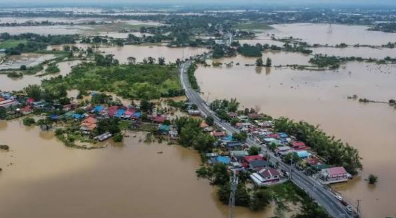
A warmer atmosphere can hold more moisture, which can contribute to heavier rainfall when suitable atmospheric conditions occur. Intense rainfall can overwhelm drainage systems and rivers, increasing the risk of flooding.
Floods can damage homes, roads, bridges, agricultural land, schools, businesses, and other infrastructure.
》 Weather and Climate Change in Africa
African countries face diverse climate and weather challenges. Many communities depend on agriculture, livestock, fisheries, forests, and other natural resources for income and food.
Changing rainfall and temperature conditions can therefore have significant effects on livelihoods. Drought can affect farming and livestock, while heavy rainfall and flooding can damage crops and infrastructure.
》 The Importance of Climate Information in Africa
Reliable weather forecasts, seasonal forecasts, and climate information can help communities prepare for environmental risks.
Farmers can use climate information to make decisions about planting, irrigation, crop selection, and harvesting. Governments can use climate data to support infrastructure planning, disaster preparedness, water management, and public health programs.
Early warning systems are also important because timely information can help communities prepare for potentially dangerous weather events.
》 How Climate Change Affects Agriculture
Agriculture depends heavily on suitable weather and climate conditions. Changes in temperature, rainfall, soil moisture, and growing seasons can affect crop production.
》 Climate-Smart Agriculture
Farmers can improve resilience by adopting practices such as:
● Efficient irrigation
● Soil conservation
● Agroforestry
● Water harvesting
● Improved crop varieties
● Sustainable livestock management
These approaches can help farmers manage climate-related risks while improving the sustainable use of natural resources.
》 Solutions to Climate Change
Addressing climate change requires both mitigation and adaptation.
》 Renewable Energy
Renewable energy sources such as solar, wind, and hydropower can help reduce reliance on fossil fuels when developed appropriately. Expanding clean energy can also support energy access and sustainable economic development.
》 Protecting Forests and Ecosystems
Forests and other ecosystems provide important environmental services. Protecting forests, restoring degraded land, and preventing unnecessary deforestation can support biodiversity while contributing to climate mitigation.
》 Building Climate Resilience
Communities can prepare for climate risks by improving infrastructure, water management, agricultural systems, healthcare planning, emergency preparedness, and early warning systems.
Individuals can also contribute by conserving energy and water, reducing waste, using resources responsibly, and supporting sustainable practices.
》 Why Understanding Weather and Climate Change Matters
Understanding ‘weather and climate change’ helps people distinguish between daily atmospheric conditions and long-term environmental trends.
A single storm, cold day, or hot afternoon does not by itself demonstrate a long-term climate trend. Scientists examine observations over many years to determine whether climate patterns are changing.
This distinction is important because accurate climate information supports better decisions in agriculture, healthcare, urban development, infrastructure, energy, and disaster preparedness.
Conclusion
Weather and climate change are connected but different concepts. Weather describes short-term atmospheric conditions, while climate describes long-term patterns. Human activities that increase greenhouse gas concentrations are driving significant changes in the Earth’s climate, which can influence temperature, rainfall, drought, heatwaves, and other weather-related risks.
Understanding these changes can help individuals, communities, governments, farmers, and businesses prepare for environmental challenges. Through climate adaptation, renewable energy, sustainable agriculture, ecosystem protection, and improved weather information, societies can strengthen resilience and support a more sustainable future.