■ Overview
As the agricultural sector evolves through technology, climate adaptation, scientific research, entrepreneurship, and digital innovation, agriculture in connection to current education is becoming more and more significant. Traditional farming is no longer the only aspect of agriculture. Science, technology, business management, data, engineering, environmental sustainability, and food processing are all part of modern agriculture.
Students and young people can be prepared by current education to comprehend these developments and acquire useful abilities that can be used in agricultural research, agribusiness, farming, and related fields. Education may assist produce a generation capable of contributing to food security, employment, entrepreneurship, and sustainable development by tying classroom knowledge to actual agricultural concerns.
》 What Is Agriculture in Relation to Current Education?
Agriculture in relation to current education refers to the way modern educational systems teach agricultural knowledge and skills while incorporating science, technology, entrepreneurship, environmental awareness, and practical learning.
Traditional agricultural education may focus mainly on crop production and livestock management. Modern agricultural education has a broader approach. Students can learn about precision farming, irrigation, agricultural economics, food processing, agricultural machinery, digital farming, climate-smart agriculture, soil management, and agricultural marketing.
This approach allows learners to understand agriculture as a complete economic and scientific system rather than simply an activity carried out on farms.
》 Importance of Agricultural Education in Modern Society
Agricultural education plays an important role in preparing young people for challenges affecting food production and rural development. Population growth, environmental changes, changing consumer demand, and technological development are creating new requirements for agricultural workers.
Through education, students can learn how to increase productivity while using natural resources responsibly. They can also acquire skills that allow them to create agricultural businesses or pursue professional careers.
Agricultural education can therefore contribute to:
● Food security and improved food production
● Youth employment and entrepreneurship
● Sustainable use of natural resources
● Agricultural innovation
● Rural economic development
● Climate adaptation
● Improved farm management
》 Agriculture and Technology in Current Education
Technology is one of the most important connections between agriculture and modern education. Students can use computers, smartphones, online courses, digital libraries, educational videos, and agricultural applications to access information.
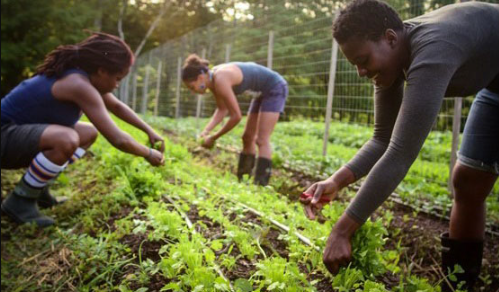
Modern agricultural technology can include GPS-based farming, sensors, drones, satellite imagery, automated irrigation, farm-management software, and data analysis. Education can introduce students to these technologies and explain how they can be used to monitor crops, manage resources, identify problems, and improve decision-making.
For example, a student studying agriculture may learn how satellite imagery can help identify areas of a farm experiencing water stress. This combines agricultural knowledge with geography, information technology, and data analysis.
》 Real-World Example: Digital Agricultural Learning
A practical example is the use of online agricultural learning platforms and digital extension resources. Students and farmers can access educational materials covering crop production, livestock management, soil health, pest control, and farm business management.
Organizations such as the Food and Agriculture Organization of the United Nations (FAO) have developed digital learning and knowledge resources that support agricultural education and capacity building.
This demonstrates how agricultural learning is increasingly moving beyond the traditional classroom and farm demonstration into digital environments.
》 Practical Learning Through School and College Farms
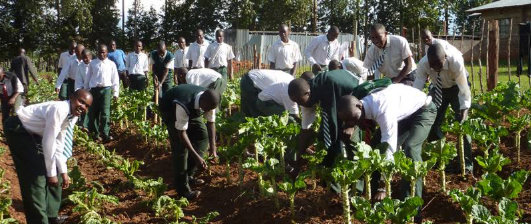
Agriculture education becomes more meaningful when students can apply classroom knowledge to practical projects. Schools and colleges can establish demonstration gardens, poultry units, livestock projects, tree nurseries, greenhouses, or small irrigation projects.
Students can participate in activities such as preparing land, planting crops, monitoring growth, managing pests, harvesting, keeping production records, and calculating costs.
For example, a school vegetable garden can teach students about soil preparation and crop production while also introducing mathematics through measurements, budgeting, and yield calculations. Such projects can make education more practical and encourage students to see agriculture as an area for innovation and entrepreneurship.
》 Agriculture, STEM Education, and Innovation
Agriculture has strong connections with science, technology, engineering, and mathematics (STEM). Biology helps students understand plant and animal systems, chemistry contributes to soil and nutrient studies, mathematics supports farm budgeting and yield calculations, while engineering contributes to irrigation systems and agricultural machinery.
Modern agricultural education can therefore integrate STEM subjects with practical agricultural problems.
For instance, students can design a simple irrigation system, measure water consumption, calculate the area of a farm, or analyze crop-production data. These activities develop technical and problem-solving skills that can be useful in both agriculture and other industries.
》 Climate Change and Agricultural Education
Climate change has increased the importance of agricultural education. Farmers in different regions face challenges such as droughts, floods, changing rainfall patterns, soil degradation, heat, and changing pest and disease conditions.
Current education can introduce learners to climate-smart agricultural approaches. These may include water conservation, agroforestry, soil conservation, crop diversification, improved irrigation, efficient resource management, and the use of suitable crop varieties.
Students can also learn how environmental conservation and agricultural production can work together. This is particularly important for countries where communities depend heavily on natural resources and agriculture for their livelihoods.
》 Agriculture and Entrepreneurship Education
Modern agricultural education should not focus only on employment. It can also prepare students to create businesses.
Agricultural entrepreneurship can involve crop production, livestock farming, poultry, beekeeping, aquaculture, food processing, agricultural inputs, transportation, storage, packaging, and agricultural marketing.
Students can learn how to prepare business plans, estimate production costs, identify customers, manage finances, promote agricultural products, and evaluate business opportunities.
For example, a student may identify a local demand for processed fruit products and develop a small business model around fruit drying, packaging, and marketing. This combines agricultural knowledge with entrepreneurship and business management.
》 Real-World Example: Agricultural Universities and Research
Universities and agricultural research institutions provide another important example of the relationship between agriculture and education. Institutions such as agricultural universities conduct research into crop production, livestock, soil management, agricultural economics, food science, and environmental sustainability.
Students can participate in research projects that address practical agricultural problems. Research findings can then support farmers, policymakers, agricultural businesses, and extension services.
This connection between education, research, and farming demonstrates why modern agricultural education should respond to real-world challenges rather than focus only on theoretical knowledge.
》 Digital Agriculture and the Future of Learning
The future of agricultural education is likely to become increasingly digital. Artificial intelligence, remote sensing, mobile applications, data analytics, robotics, and precision agriculture are creating new areas of learning.
Students entering agriculture-related careers may need both traditional agricultural knowledge and digital skills. Understanding how to collect, analyze, and use agricultural data can become increasingly valuable.
However, digital education also requires reliable internet access, appropriate devices, digital literacy, and affordable learning resources. Educational institutions and development organizations therefore need to consider accessibility when introducing technology-based agricultural learning.
》Agriculture Careers for Educated Young People
Current agricultural education can lead to many career opportunities. Depending on their qualifications, students may pursue careers such as:
● Agribusiness manager
● Agricultural technology specialist
● Agricultural teacher or lecturer
● Agronomist
● Agricultural economist
● Agricultural engineer
● Livestock specialist
● Farm manager
● Food scientist
● Agricultural researcher
● Environmental specialist
There are also opportunities in agricultural finance, food processing, logistics, agricultural marketing, supply-chain management, and digital farming.
》 Why Agriculture Education Matters for Africa
Agriculture remains an important source of livelihoods and economic activity across many African countries. Strengthening agricultural education can help young people develop skills relevant to farming, agribusiness, technology, and rural development.
Educational institutions can work with farmers, government agricultural departments, NGOs, private companies, research organizations, and extension services to provide practical learning opportunities.
Such partnerships can help students understand the actual challenges faced by agricultural communities while giving them opportunities to develop solutions.
Conclusion
‘Agriculture in connection to current education’ illustrates the growing interconnectedness of farming, science, technology, entrepreneurship, and environmental sustainability. Students can acquire the theoretical knowledge and practical skills required in a changing agricultural industry with the aid of modern agriculture education.
Education may prepare youth for a variety of opportunities throughout the agricultural value chain, from school gardens and agricultural research to digital farming and climate-smart agriculture. Combining agricultural expertise with digital, scientific, and entrepreneurial abilities will become more crucial as technology continues to impact farming.